A new battle in Venezuela
Jan 17, 2026
Washington [US], January 17: Following the U.S. arrest of Venezuelan President Nicolas Maduro, the administration of his successor and an opposition leader in the South American nation are racing to reach Washington.
Caracas' move
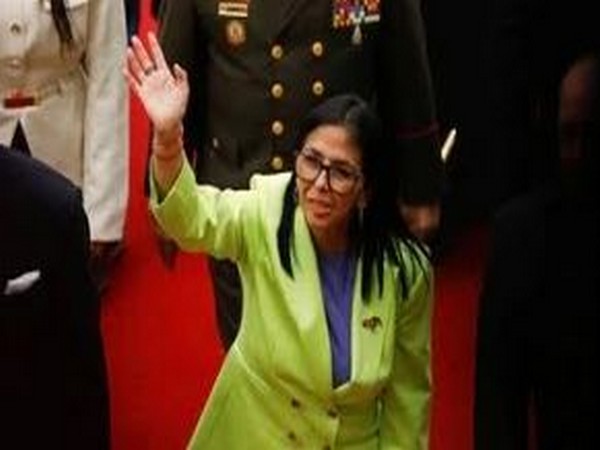
Venezuela's interim government under President Delcy Rodriguez is taking steps to improve relations with the United States following tensions earlier this year. On January 15, Rodriguez delivered her first State of the Union address since President Nicolas Maduro was arrested by the U.S. on January 3.
According to AP, the female leader announced a new policy to open up the oil industry to more foreign investment, after US President Donald Trump
The day before, Ms. Rodriguez had a "long, productive, and constructive" phone call with President Trump. She said they discussed the bilateral agenda for the benefit of the people of both countries, as well as outstanding issues in the relationship between the two governments.
At the White House, President Trump described Ms. Rodriguez as "a wonderful person," and said the two sides had discussed many areas, including oil, minerals, trade, and national security. He stated that US-Venezuela relations are currently "progressing very well." The phone call marks a significant shift in diplomatic relations between the US and Venezuela
Having served as vice president and been a strong defender of the Maduro regime, Rodriguez did not adopt the same harsh criticism of the U.S. as her predecessor. While calling Maduro's arrest a "stain on bilateral relations," Rodriguez promoted the restoration of diplomacy based on mutual respect.
Since taking office on January 5th, Ms. Rodriguez has declared her willingness to cooperate with the US in the energy sector and has released prisoners, including many Americans. On January 15th, Ms. Rodriguez's special envoy met with US officials in Washington D.C. to discuss the possibility of the two countries reopening embassies in each other's capitals.
Mrs. Machado's move
Also on January 15th, President Trump hosted Maria Corina Machado, one of Venezuela's opposition leaders, at the White House
As a gesture to curry favor with the president, Machado presented her Nobel Peace Prize medal to Trump "in gratitude for his extraordinary leadership in promoting peace through strength." Trump confirmed receiving the medal and called it "a wonderful gesture of mutual respect." Meanwhile, the Nobel Peace Prize Centre (Norway) announced that the medal could be awarded, but the Nobel Peace Prize title was non-transferable.
Ms. Machado did not disclose the content of her meeting with President Trump but called it a "historic" event and stated that she could count on the leader. Meanwhile, White House Press Secretary Karoline Leavitt praised Ms. Machado as an "outstanding and courageous" figure but stressed that President Trump's "realistic assessment" of her remained unchanged. On the other hand, Ms. Leavitt said that Trump supported new elections in Venezuela at the appropriate time but did not specify when.
Source: Thanh Nien Newspaper