Kissht's Ranvir Singh: Faster Lending Isn't the Hard Part Anymore
Aug 21, 2026
HT Syndication
New Delhi [India], August 21: A loan being approved instantly, without a human reviewing it, was once a powerful demonstration of what fintech could do. Ranvir Singh thinks that threshold has already been crossed.
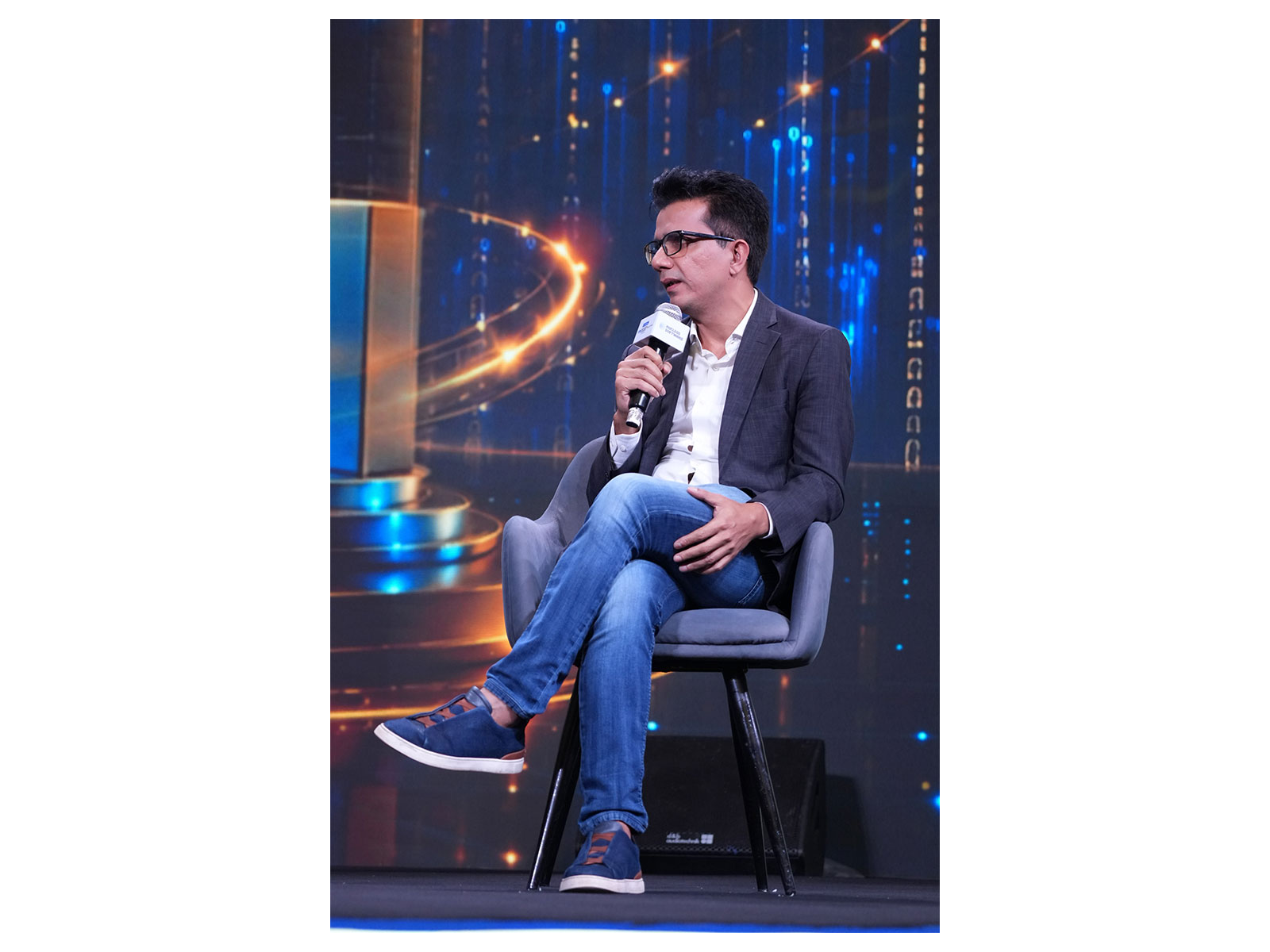
Speaking at the CNBC-TV18 Banking Transformation Summit, Kissht's Chairman and CEO was asked whether AI had advanced far enough for lenders to trust it with credit decisions entirely on its own, without human involvement.
Ranvir's response was less about replacing people and more about how the nature of credit assessment itself is changing.
"The question in traditional lending was a deceptively simple one: whether the customer will repay or not. With AI, you are able to ask a much richer set of questions: in what circumstances will the customer pay? Can you pick up signals before something deteriorates? Does the pattern resemble millions of other customers? The potential of AI is only beginning to touch us. At the same time, one has to be cautious of the false precision AI can create. But when it comes to whether the machine is taking the decision, and whether AI is helping it take that decision better, the answer is a resounding yes."
What Singh is separating here are two things that often get bundled together: automating a lending decision, and improving the intelligence behind that decision. The first is already well established in digital lending. The second is where he sees AI beginning to change underwriting.
He also cautioned against assuming that more data automatically leads to better judgment. AI can create what he described as a sense of false precision, and even very large datasets can still lead to poor conclusions if the underlying interpretation is weak.
That focus on decision quality also came through when the discussion moved to repayments. Singh said the shift from NACH to UPI AutoPay has made a meaningful difference for digital lenders by making repayment easier and more seamless. He did not expect MDR to materially alter the economics of lending, arguing that customer quality and the ability to correctly differentiate risk remain far more important.
The larger point was that technology can remove friction, but it does not change the basic discipline of lending. Lenders still have to identify the right customers, distinguish between levels of risk and make those decisions consistently well.
That same thinking shaped Singh's answer when the panel turned to what Indian fintech gets too little credit for.
"Fintechs have the ability to go after narrow segments with an almost obsessive focus and understand them at a very granular level. I think that is extremely underrated. What is slightly overrated is the availability of capital. Large capital with mediocre underwriting can be remarkably inefficient."
In a market as varied as India, that ability to understand smaller customer cohorts can matter as much as sheer scale. Income, occupation, credit history and repayment behaviour can differ sharply across segments, making granular underwriting a competitive advantage in its own right.
It also explains Singh's caution around capital. Funding can accelerate growth, but it cannot compensate for weak underwriting.
That was perhaps the clearest theme running through his remarks: fintech may have become faster and more automated, but lending still comes down to how well a lender understands the customer and the risk behind the decision.
(ADVERTORIAL DISCLAIMER: The above press release has been provided by HT Syndication. ANI will not be responsible in any way for the content of the same.)