Phylogenomics Unlocks Sleep's Deepest Secret: Conserved Enzyme Network Reveals the Cellular Origins of Sleep
Jul 27, 2026
PNN
Chennai (Tamil Nadu) [India], July 27: A landmark phylogenomic study published in Sleep and Vigilance provides compelling evidence that sleep is far older than the brain itself. By tracing the evolutionary history of hundreds of sleep-related genes across the Tree of Life, researchers conclude that the molecular machinery underlying sleep originated in Earth's earliest cells, long before the evolution of nervous systems or consciousness.
The study, "Phylogenomics Traces the Primordial Function of Sleep to an Ancient Conserved Enzyme Network," by Seithikurippu R. Pandi-Perumal, David Warren Spence, and Konda Mani Saravanan, identifies an ancient network of conserved enzymes that links human sleep to the earliest forms of life. The findings suggest that sleep first evolved as a cellular program for metabolic maintenance and repair before later being integrated into complex nervous systems.
Ancient Enzymes Reveal Sleep's Evolutionary Roots
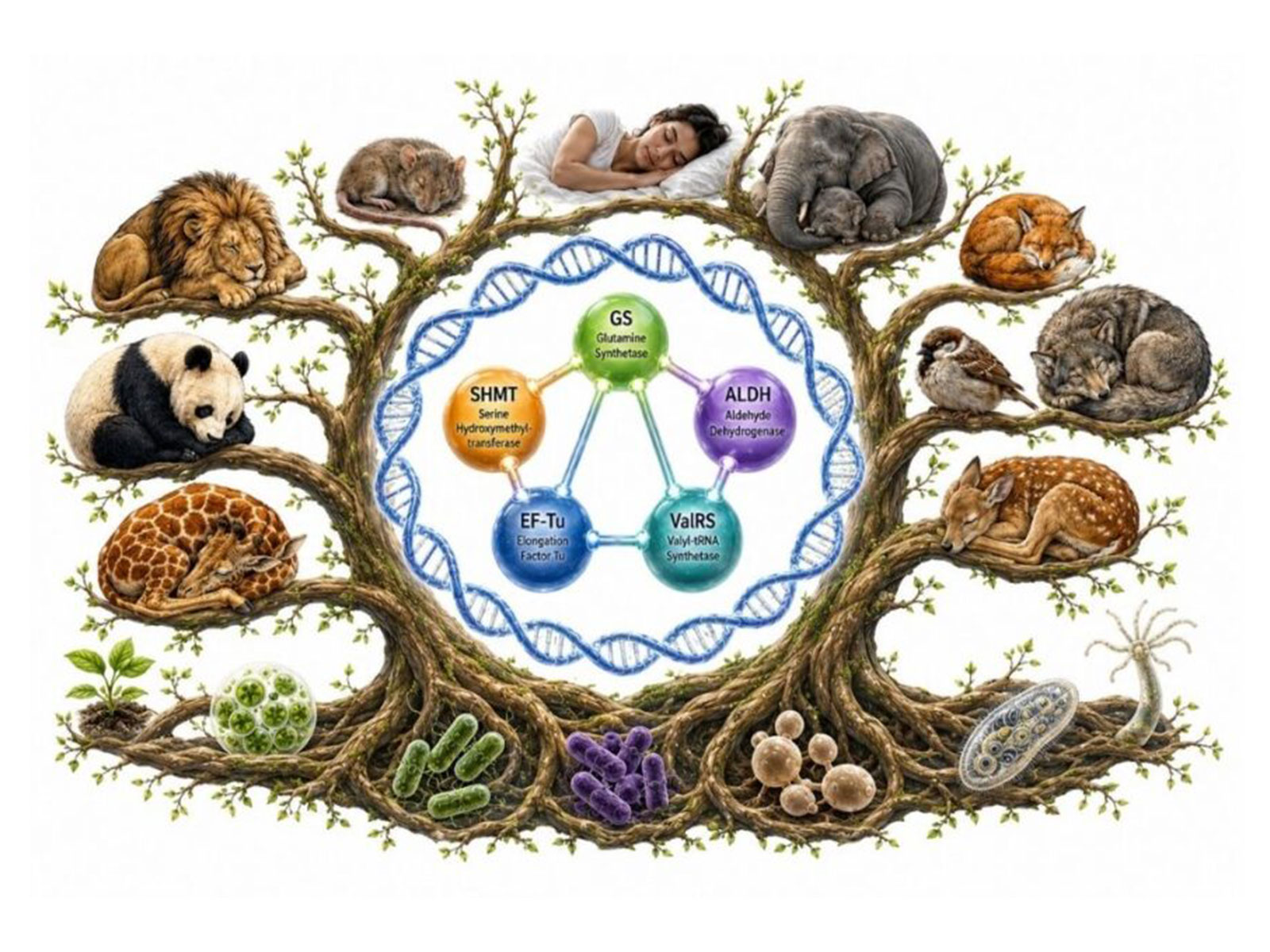
The researchers analyzed more than 280 human sleep-associated genes and reconstructed their evolutionary histories across bacteria, archaea, and eukaryotes. Five enzymes emerged as universally conserved throughout evolution: glutamine synthetase (GS), serine hydroxymethyltransferase (SHMT), elongation factor Tu (EF-Tu), aldehyde dehydrogenase (ALDH), and valyl-tRNA synthetase (ValRS).
These enzymes perform essential cellular functions, including protein synthesis, amino acid metabolism, detoxification, oxidative stress protection, and maintenance of metabolic homeostasis. Their remarkable conservation from the Last Universal Common Ancestor (LUCA) to modern humans suggests that the biochemical foundations of sleep originated as fundamental mechanisms supporting cellular survival.
"We have uncovered a molecular thread connecting every living organism on Earth," said lead author Seithikurippu R. Pandi-Perumal. "When humans sleep, they activate biochemical pathways that have been conserved since the earliest stages of life. Sleep is therefore not simply a brain phenomenon but a deeply rooted cellular process inherited through evolution."
Challenging the Neurocentric View of Sleep
For decades, sleep has primarily been viewed as a function of the brain. The new study challenges this long-standing paradigm by demonstrating that many sleep-associated genes evolved long before neurons and nervous systems appeared.
The authors integrate their phylogenomic findings with evidence from simple organisms such as Hydra, jellyfish, and single-celled algae, all of which exhibit sleep-like states despite lacking complex brains. Together, these observations support the hypothesis that sleep originated as a universal cellular strategy for restoring metabolic balance, repairing molecular damage, and maintaining physiological integrity.
"Our findings suggest that sleep evolved first for the cell, not for the brain," said co-author Prof. Konda Mani Saravanan. "The brain later adopted and coordinated an already ancient biological program. This fundamentally changes how we think about why sleep exists."
New Directions for Sleep Medicine
The discovery also has important implications for human health. Millions of people worldwide suffer from insomnia, sleep apnea, circadian rhythm disorders, and other sleep-related conditions. Current therapies largely address symptoms or neural regulation, but the study suggests that disrupted cellular metabolism and repair mechanisms may represent deeper biological causes.
Because the conserved enzymes identified in the study regulate oxidative stress, protein quality control, detoxification, and energy metabolism, they provide promising targets for future therapeutic research.
"This work shifts an important scientific question," added Pandi-Perumal. "Instead of asking only what is wrong with the brain, we should also ask what is happening within the cell. Understanding these ancient cellular pathways may ultimately lead to more effective approaches for restoring healthy sleep."
A Unifying Evolutionary Framework
Beyond its medical significance, the study proposes a unifying evolutionary explanation for why sleep is nearly universal across the living world. Rather than evolving independently in different lineages, sleep may represent an inherited biological program that originated in the earliest common ancestor of all living organisms.
The findings further reinforce the intimate relationship between sleep and essential biological processes, including metabolism, DNA repair, protein homeostasis, immune regulation, and resistance to oxidative stress. Sleep, therefore, emerges not as a passive period of inactivity but as an active state of cellular restoration that has been preserved throughout billions of years of evolution.
"Every restorative process that occurs during sleep has roots in ancient cellular pathways conserved across life," said Prof. Saravanan. "Sleep represents one of biology's oldest and most enduring survival strategies."
Key Highlights
- Ancient Origins: More than 280 human sleep-associated genes were traced across the Tree of Life using phylogenomic analyses.
- Universal Conservation: Five core metabolic enzymes were found to be conserved from LUCA to humans.
- Paradigm Shift: The findings support the hypothesis that sleep originated as a cellular maintenance program before the evolution of brains and nervous systems.
- Clinical Potential: Conserved metabolic pathways identified in the study may provide new therapeutic targets for sleep disorders and related diseases.
- Evolutionary Insight: The study offers a unified explanation for the near-universal occurrence of sleep across diverse forms of life.
Publication
Pandi-Perumal SR, Spence DW, Saravanan KM. Phylogenomics Traces the Primordial Function of Sleep to an Ancient Conserved Enzyme Network. Sleep and Vigilance (2026). DOI: https://doi.org/10.1007/s41782-026-00360-y
About the Authors
Seithikurippu R. Pandi-Perumal, David Warren Spence, and Prof. Konda Mani Saravanan conduct interdisciplinary research at the interface of evolutionary biology, genomics, and sleep medicine. Their ongoing phylogenomic studies seek to uncover the evolutionary origins of sleep and translate these discoveries into new biological insights and therapeutic opportunities.
(ADVERTORIAL DISCLAIMER: The above press release has been provided by PNN. ANI will not be responsible in any way for the content of the same.)