Why India's MSMEs Are the Biggest Beneficiaries of the Automation Wave
Feb 09, 2026
PNN
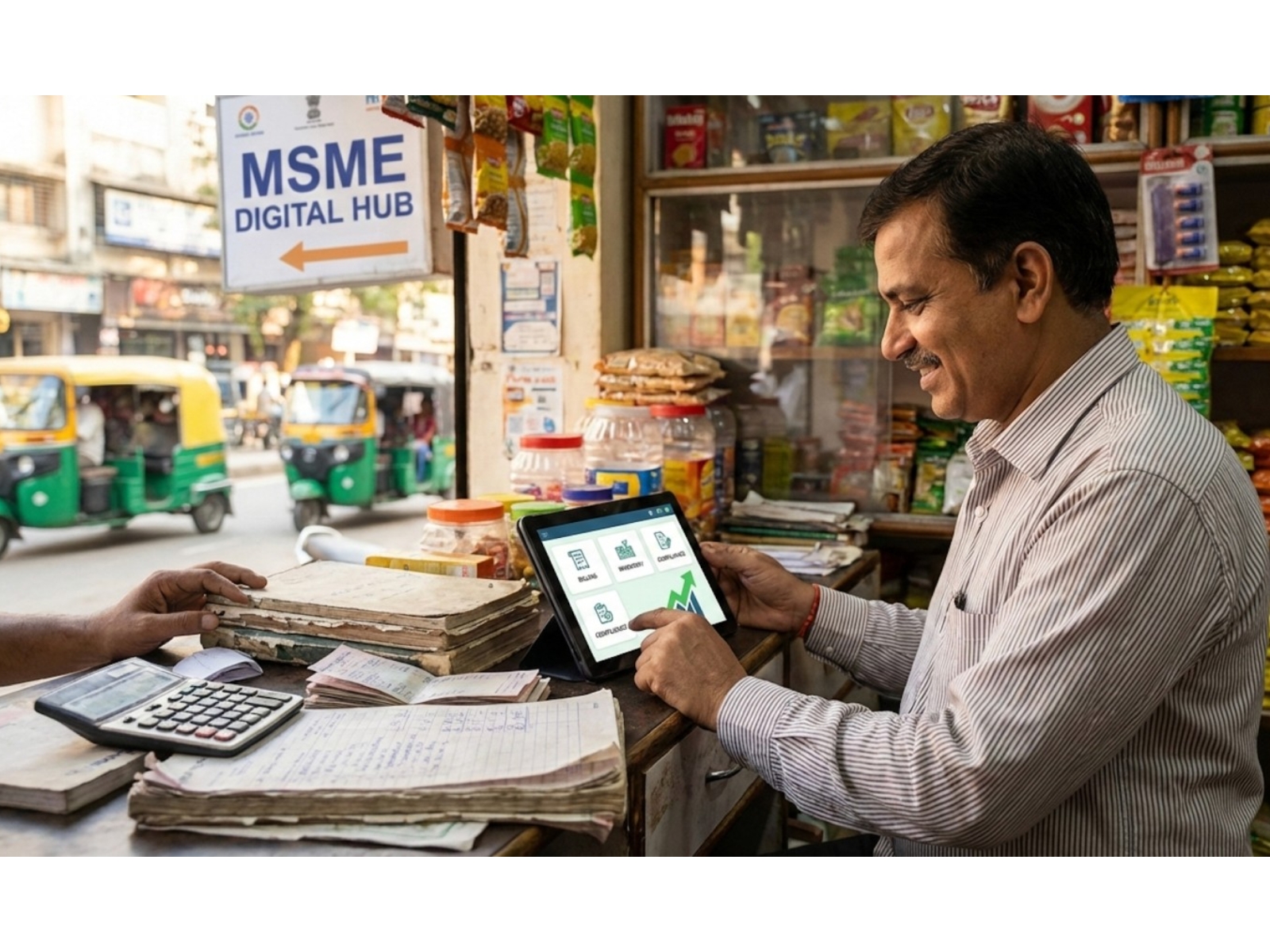
New Delhi [India], February 9: India's MSME sector has always been known for its scale and diversity. From neighbourhood retailers and wholesalers to service providers, manufacturers, and distributors, small businesses form the foundation of everyday commerce. Yet for decades, most MSMEs operated with limited systems, relying on manual processes to manage billing, inventory, accounting, and compliance. In recent years, simple forms of automation have begun changing this reality. Routine business tasks such as billing, record keeping, inventory updates, and compliance tracking are increasingly being handled through digital tools instead of manual processes. As a result, MSMEs stand to gain more from this shift than any other segment of the economy, because even small reductions in manual effort make a meaningful difference to their daily operations.
The current wave of automation is not about replacing people or overhauling businesses overnight. It is about reducing friction in daily operations and helping business owners work with greater clarity and control. For MSMEs, automation addresses long-standing gaps that have quietly limited efficiency, growth, and compliance. Platforms built specifically for small businesses are becoming central to this transformation, and Vyapar App has emerged as one of the key enablers in this evolving ecosystem.
The Operational Reality of Indian MSMEs
Most MSMEs operate with small teams and limited resources. Business owners often handle multiple responsibilities themselves, from customer interactions and supplier coordination to bookkeeping and tax reporting. In such an environment, even basic tasks can become time-consuming when handled manually.
Processes like billing, purchase entry, stock tracking, and payment follow-ups are repetitive by nature. When these activities are done on paper or across disconnected tools, errors and delays become inevitable. Over time, this affects visibility into cash flow, inventory levels, and profitability. Automation helps remove this burden by simplifying routine activities such as invoice creation, purchase entry, inventory updates after sales, payment tracking, and GST-related record maintenance. By reducing repetitive data entry and manual reconciliation, business owners are able to spend more time on customer interactions, supplier coordination, and day-to-day business operations rather than managing paperwork.
Why Automation Matters More for Small Businesses
Large enterprises have long benefited from automation, largely because early systems were expensive, complex, and required specialised teams to implement and maintain them. MSMEs were often excluded from this advantage, not due to lack of need, but because such systems were difficult to adopt in small, fast-moving businesses. Over time, automation has evolved. It has shifted from heavy, customised enterprise solutions to simpler digital tools focused on everyday business tasks. This change has given MSMEs a clear advantage in recent years, as automation is now more affordable, accessible, and easier to adopt without disrupting daily operations.
For small businesses, even small efficiency gains make a meaningful difference. Automating invoice creation, purchase entry, inventory updates, or GST calculations can save hours every week. These time savings compound quickly, improving both productivity and decision-making. Automation also reduces dependency on individual memory or availability, making operations more resilient.
Importantly, automation helps MSMEs maintain accuracy. Clean records reduce compliance risks, improve financial discipline, and build confidence when dealing with suppliers, customers, or tax professionals.
The Shift from Manual Processes to Assisted Operations
Automation in the MSME context should not be seen as fully autonomous systems taking over business decisions. Instead, it acts as an assistive layer that supports everyday work. For example, in a small retail store, a single sale usually affects multiple records at once. When a bill is generated, stock levels need to be updated, payment details recorded, and the transaction reflected in accounts for GST purposes. Automating tasks such as converting invoices into digital records, updating stock automatically after billing, and generating tax-ready reports removes repetitive manual work while keeping the business owner fully in control of daily decisions.
This shift from manual to assisted operations is critical. MSMEs are not looking for complex tools. They need systems that fit naturally into how they already work. Automation succeeds when it simplifies existing processes rather than forcing new ones. This is where MSME-focused platforms have created meaningful adoption.
The Role of Platforms Built for MSMEs
Automation only benefits small businesses when it is implemented through tools designed for their realities. Complex enterprise software rarely works in this context. MSMEs need platforms that are intuitive, flexible, and reliable even with limited infrastructure.
For Example, Vyapar has built its approach around these principles. It focuses on automating everyday business tasks such as billing, inventory tracking, accounting, payment reminders, and GST compliance, while keeping the interface simple. By offering automation within familiar workflows, the platform allows businesses to adopt technology gradually and confidently.
This approach has helped bring a large number of MSMEs into the digital ecosystem, many of whom are using business software for the first time. Automation in this form does not feel like disruption. It feels like support. Vyapar has also positioned itself as an anchor in this ecosystem by providing a central system where automation supports billing, inventory, accounting, and compliance together.
Rather than pushing rapid or forced digitisation, Vyapar enables businesses to adopt automation at their own pace. This flexibility is important in a sector as diverse as MSMEs. As businesses grow and their needs evolve, automation can expand alongside them without requiring a complete change in systems.
Automation in Compliance and Business Visibility
As compliance and daily business management become more closely linked for MSMEs, automation plays a practical role in reducing complexity and improving clarity. Its impact is most visible in two interconnected areas: regulatory readiness and operational visibility.
1. Simplifying ongoing compliance requirements: With the introduction of GST, MSMEs are required to maintain accurate invoices, tax calculations, and structured records throughout the year. Manual compliance often leads to errors, delays, and last-minute stress, especially for businesses handling frequent transactions. Automation helps address this by calculating taxes at the time of billing, generating GST-compliant invoices, and maintaining organised records automatically as transactions occur. This reduces dependency on periodic data preparation and lowers the risk of inaccuracies during filing.
2. Making collaboration with tax professionals easier: When compliance data is recorded consistently through automated systems, it becomes easier to share information with Chartered Accountants and tax professionals. Instead of sorting invoices and reconciling records manually, MSMEs can rely on structured data that remains available and consistent across reporting periods. This saves time for both business owners and professionals and reduces back-and-forth during return filing.
3. Improving visibility into daily business operations: Beyond compliance, automation improves how MSMEs view their day-to-day performance. Sales activity, stock movement, outstanding payments, and expenses are captured as part of routine workflows. This gives business owners a clearer picture of what is happening in their business at any given point, without having to rely on memory or informal tracking.
4. Supporting better operational decisions: With reliable visibility into transactions and records, MSMEs are better positioned to make practical decisions. Inventory purchases can be planned based on actual stock movement, cash flow can be monitored more closely, and pricing adjustments can be made using real figures rather than estimates. Importantly, this level of insight does not require accounting expertise. Automation ensures that information is organised and accessible, allowing business owners to stay informed without increasing their workload.
Looking Ahead
India's MSME sector will continue to grow and adapt in the years ahead. Automation will play an increasingly important role in helping small businesses remain competitive, compliant, and efficient. The biggest beneficiaries of this shift will not be companies with the largest budgets, but those that adopt practical tools that reduce everyday friction.
Platforms that understand the realities of MSMEs and embed automation into daily workflows will remain central to this transition. Vyapar's focus on simplifying operations while supporting automation places it firmly within this ongoing change.
Conclusion
Automation is reshaping the way India's MSMEs operate, not by replacing human effort, but by supporting it. By reducing manual work, improving accuracy, and enhancing visibility, automation helps small businesses manage complexity with confidence.
As the MSME ecosystem continues to evolve, automation will no longer be seen as an optional upgrade. It will be a basic requirement for sustainability. In this changing landscape, platforms like Vyapar serve as steady enablers, helping MSMEs navigate the automation wave while staying focused on what matters most, running and growing their businesses.
(ADVERTORIAL DISCLAIMER: The above press release has been provided by PNN. ANI will not be responsible in any way for the content of the same.)